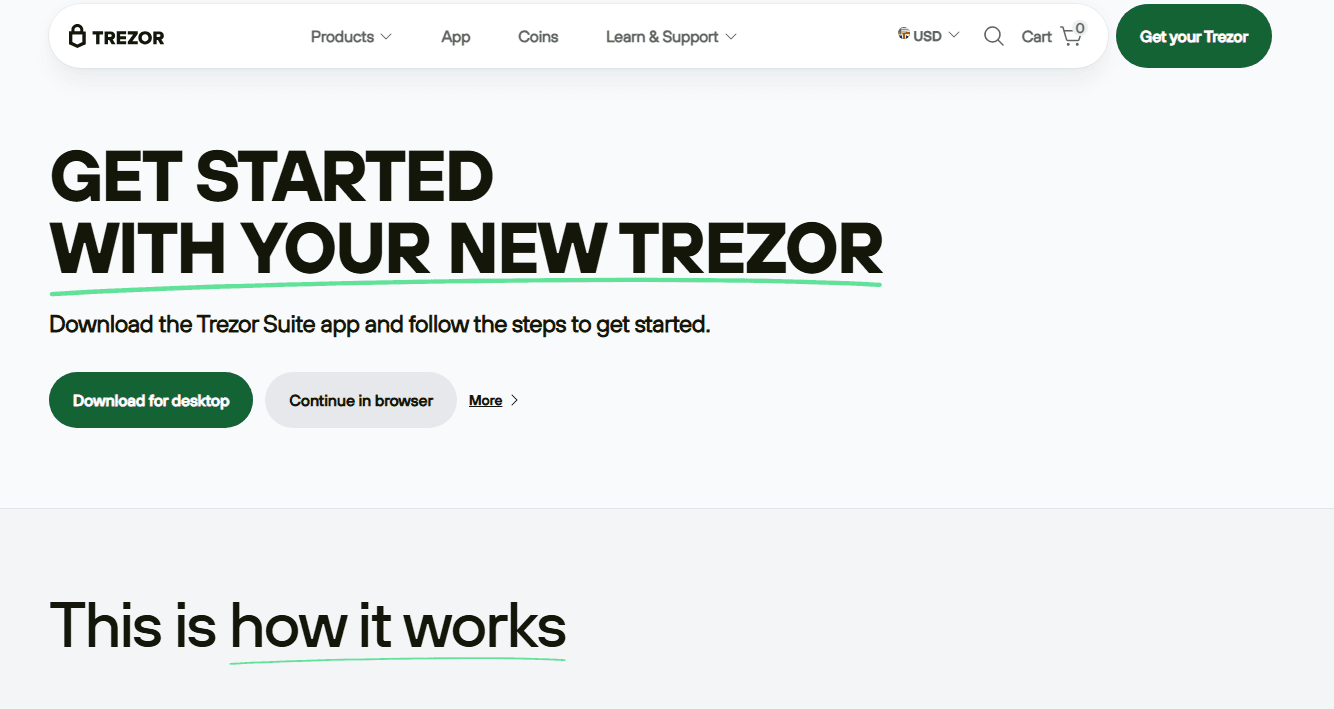
Introduction to Trezor and Trezor.io/start
Trezor.io/start is the official starting point for anyone who wants to begin their cryptocurrency journey safely and securely. As cryptocurrencies continue to gain popularity, managing and protecting digital assets has never been more important. Trezor offers hardware wallets and accompanying software solutions that provide users with full control over their assets while minimizing risks such as hacking, malware, or phishing attacks.
This platform provides step-by-step guidance for new users, helping them set up their Trezor devices securely, understand the principles of private key management, and interact with blockchain networks confidently. Trezor.io/start empowers users to take control of their digital wealth while offering a secure, intuitive, and efficient experience.
Why Trezor is Essential for Cryptocurrency Security
In the world of digital assets, security is of utmost importance. Unlike traditional bank accounts, cryptocurrency holdings are controlled solely through private keys. Losing or compromising a private key means permanently losing access to the associated assets.
Trezor hardware wallets address this issue by storing private keys offline, completely isolated from potential online threats. This ensures that private keys never leave the device, giving users complete control over their funds. Trezor.io/start explains the importance of hardware-level security and guides users on managing digital assets safely without relying on third-party custodians. This approach reflects core cryptocurrency principles such as self-custody, decentralization, and financial independence.
Getting Started with Trezor
Setting up a Trezor device is straightforward, guided, and designed to minimize errors while maximizing security. The process generally involves the following steps:
Receiving Your Trezor Device: Always ensure that the hardware wallet arrives in an official, untampered package. This guarantees authenticity and safety.
Initializing Your Device: Connect the Trezor device to a computer or mobile device. Trezor.io/start provides detailed instructions to guide users through safe initialization.
Creating a Secure PIN: A personal PIN is required to access the wallet, adding a layer of protection against unauthorized access.
Generating a Recovery Seed: The recovery seed is a critical security feature that allows users to recover their assets if the device is lost or damaged. Trezor.io/start provides guidance on securely writing down and storing the seed offline.
Installing Trezor Suite: Trezor Suite is the official software for managing cryptocurrencies, monitoring balances, and performing secure transactions. Trezor.io/start walks users through safely downloading and installing Trezor Suite.
Understanding Private Keys and Recovery Seeds
Private keys are cryptographic codes that give users access to their cryptocurrency holdings. Trezor hardware wallets protect these keys by keeping them offline and requiring physical confirmation for transactions.
The recovery seed serves as a backup mechanism, enabling users to restore access to their wallet if the device is lost, stolen, or damaged. Trezor emphasizes storing the seed securely offline, such as in a safe or encrypted storage device. Anyone with access to the recovery seed can control the wallet, so it should never be shared or stored digitally.
Trezor.io/start provides detailed instructions for creating, storing, and safeguarding the recovery seed, ensuring that users retain complete control over their assets.
Installing and Using Trezor Suite
Trezor Suite is the core software for managing cryptocurrencies with Trezor hardware wallets. It provides a user-friendly interface for checking balances, managing multiple accounts, and monitoring portfolio performance.
Trezor.io/start guides users through:
Connecting the hardware wallet to Trezor Suite
Installing supported cryptocurrency applications on the device
Adding accounts for different digital assets
Sending and receiving cryptocurrency safely
All transactions are verified on the hardware device, protecting users from malware, phishing attacks, and unauthorized access.
Security Practices Recommended by Trezor.io/start
Security is fundamental to Trezor. Trezor.io/start offers comprehensive security guidelines, including:
Never sharing your PIN or recovery seed
Using the device only on trusted computers or mobile devices
Verifying recipient addresses and transaction details on the device
Keeping the hardware wallet physically secure at all times
Following these best practices significantly reduces the risk of losing cryptocurrency and ensures long-term safety.
Multi-Currency and Multi-Account Support
Trezor hardware wallets support a wide variety of cryptocurrencies, from Bitcoin and Ethereum to numerous altcoins. Trezor.io/start explains how to manage multiple accounts efficiently, allowing users to separate funds for trading, long-term investment, and daily transactions.
This structured approach helps users organize their portfolio, track asset performance, and maintain security across multiple cryptocurrencies. Trezor Suite integrates seamlessly with the hardware wallet to ensure all transactions are confirmed directly on the device.
Firmware Updates and Device Management
Firmware updates are essential to maintain the security and functionality of Trezor devices. Trezor.io/start provides instructions for safely updating firmware without compromising device integrity.
Users are guided to:
Verify the authenticity of the Trezor device before updating
Install firmware updates through Trezor Suite
Confirm updates directly on the hardware device
Regular firmware updates protect the wallet from vulnerabilities and ensure smooth operation.
Backup and Recovery Process
Proper backup and recovery procedures are vital. The recovery seed allows users to restore wallet access if the device is lost, stolen, or damaged.
Trezor.io/start recommends:
Writing down the recovery seed clearly
Storing it securely offline in a safe location
Never sharing the seed digitally or online
Following these steps ensures that users can always regain access to their assets while maintaining full security.
Common Mistakes to Avoid
Trezor.io/start highlights common errors that users should avoid:
Using devices from unverified sources
Storing recovery seeds digitally or online
Sharing PIN codes or recovery seeds
Ignoring device verification before transactions
Neglecting firmware updates
Avoiding these mistakes helps maintain the integrity and security of digital assets.
Who Should Use Trezor
Trezor is suitable for all cryptocurrency users. Beginners benefit from guided setup and hardware-level security, while experienced investors and traders appreciate advanced features such as multi-account management, portfolio tracking, and secure handling of diverse assets.
Trezor.io/start ensures that all users, regardless of experience level, can safely navigate the process of securing and managing cryptocurrency from the very first step.
Conclusion
Trezor.io/start is a comprehensive guide for anyone beginning their cryptocurrency journey. It provides clear instructions for setting up hardware wallets, managing private keys, installing Trezor Suite, and performing secure transactions.
The platform emphasizes security, user control, and best practices, making it suitable for beginners and advanced users alike. Trezor.io/start empowers users to confidently manage digital assets, maintain full control, and embrace the principles of self-custody and financial independence.
By following the instructions and guidelines provided by Trezor.io/start, users can safely begin their cryptocurrency journey with confidence, ensuring their digital assets remain secure for the long term.